Blog
What Is Rubberwood? A Buyer’s Guide to Hevea brasiliensis

Rubberwood is the timber most buyers meet without knowing its name. It sits under a large share of the solid wood furniture shipped out of South-East Asia, and yet the question we are asked most often at enquiry stage is simply: what is it, and is it any good?
It is a plantation timber before it is a furniture timber
Rubberwood is the wood of Hevea brasiliensis, the Pará rubber tree. In France and Belgium it is traded as hévéa, and you will see that word on European quotations far more often than the English one. The trees are planted and tapped for latex for roughly twenty-five years. Once a tree stops producing commercially useful latex it is felled and replanted, and only then does the wood enter the timber trade.
That sequence matters more than it sounds. The tree was never grown for its wood, so nothing is cut from natural forest to supply a furniture order. For a European importer preparing an EUDR due-diligence file, timber that traces back to a defined plantation plot is a very different proposition from timber sourced through a mixed forest concession.
How it behaves in the workshop
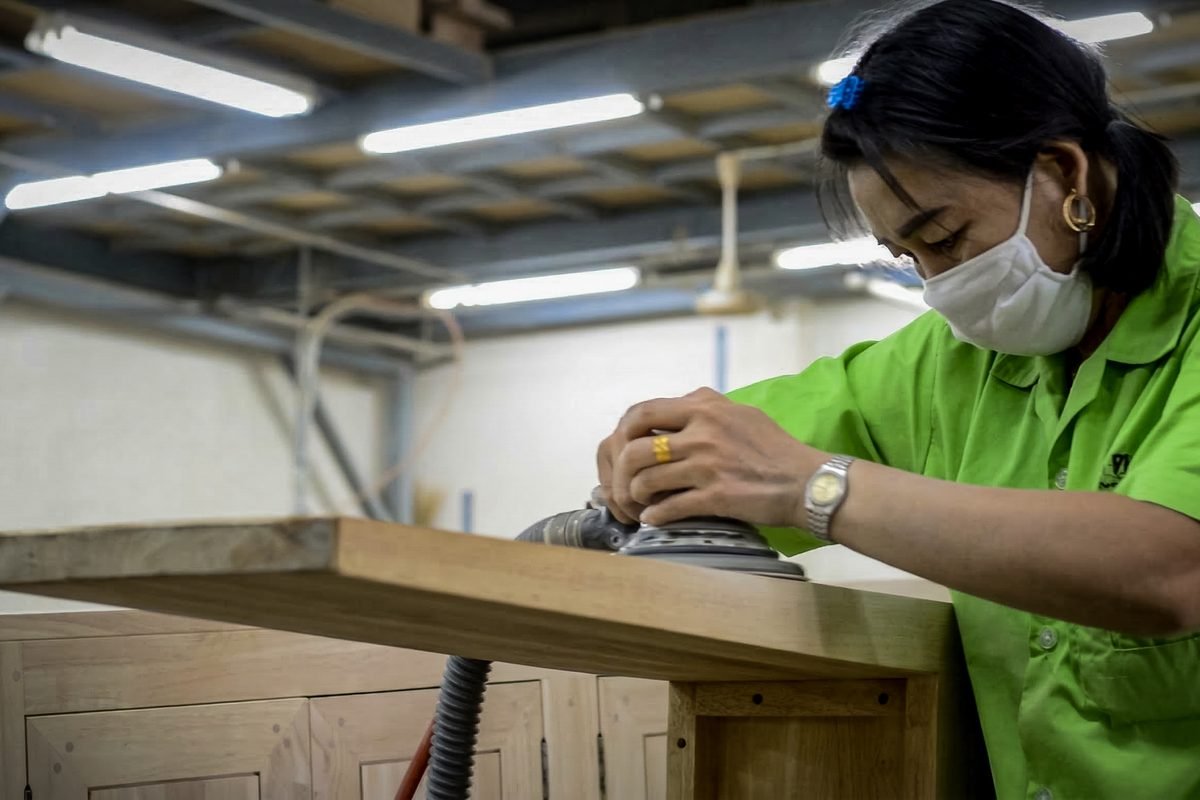
The grain is pale, close and unusually even. That evenness is the commercial argument for it: stain and paint land predictably across a production run of five hundred pieces, not just across a sample. Buyers who have wrestled with blotchy finishes on more decorative timbers tend to appreciate the consistency immediately.
On hardness it sits in useful territory — broadly comparable to ash and harder than many pines, which is enough for cabinets, tables, bed frames and shelving in normal domestic and hospitality use. It is not the right answer for a heavy-wear outdoor application, and we will say so rather than sell you the wrong material.
Kiln-drying is where orders are won or lost
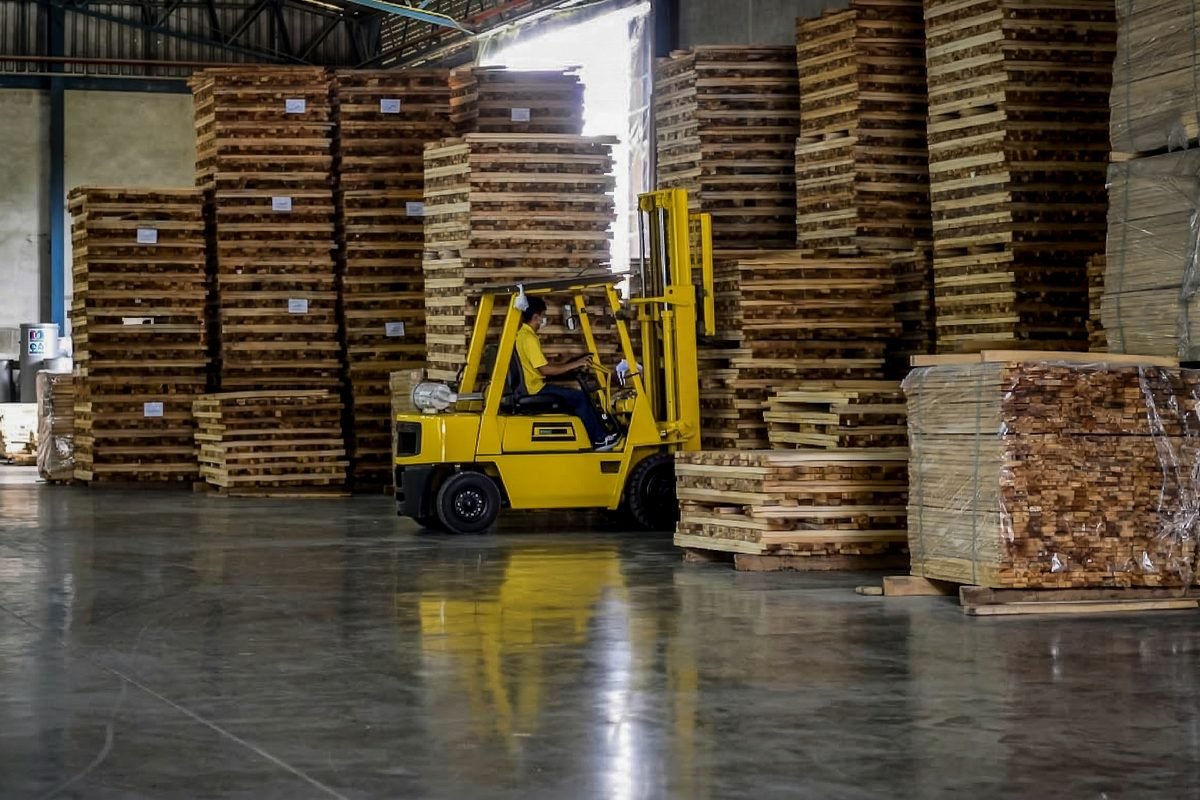
Rubberwood is a hungry timber for moisture and must be kiln-dried properly. We dry every board to 8–10% moisture content before it reaches the machine shop. Skip or rush that stage and the panel will move — not in our factory, but six weeks later in a container crossing the equator, or three months later in a dry warehouse in Arizona.
It also requires treatment against fungal staining and borers shortly after milling, because the sugars that make the tree attractive to tap also make the fresh timber attractive to insects. Any serious mill does this as a matter of course.
What to ask your supplier
- What moisture content do you dry to, and can you show the readings?
- Is the timber plantation-sourced, and can you document the chain back to the mill?
- What treatment is applied after milling?
- Which finishes have you run on this species at volume?
If a supplier cannot answer the first question with a number, that tells you most of what you need to know.
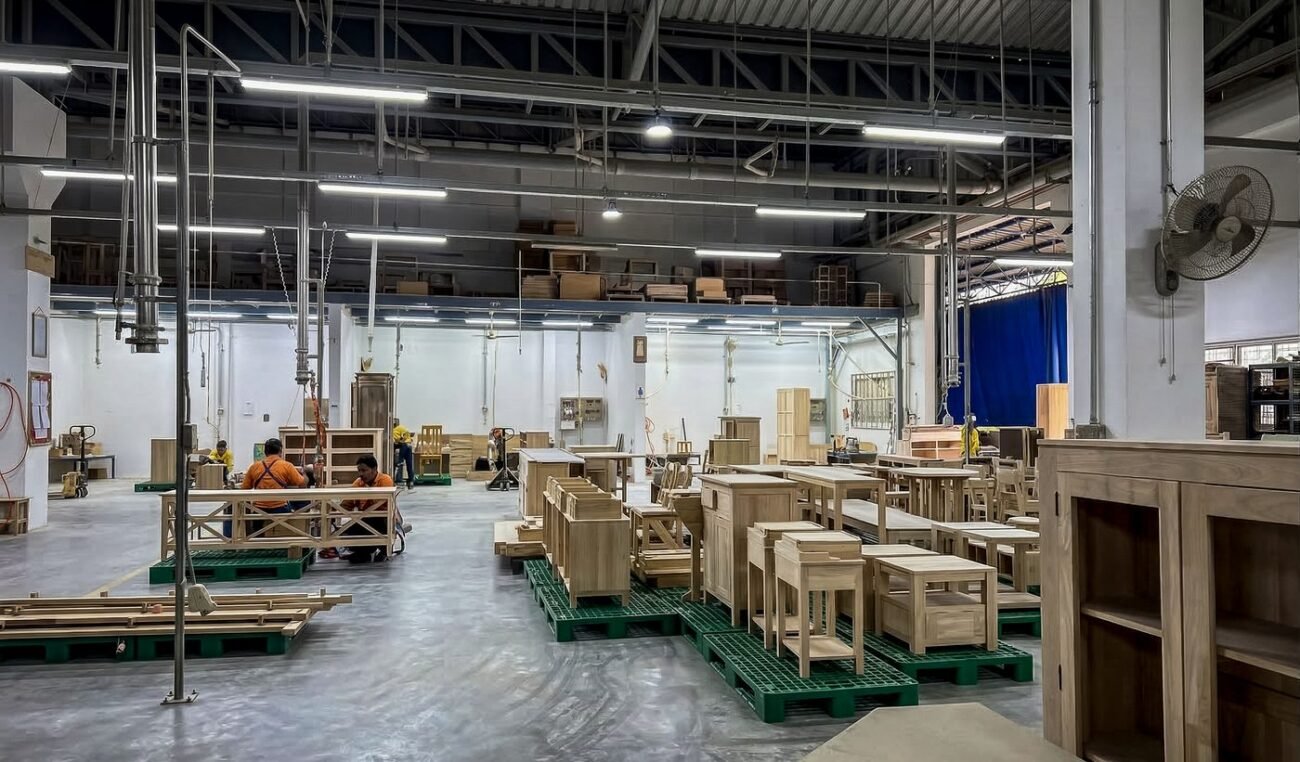
Planet Furniture has manufactured solid rubberwood furniture in Chonburi, Thailand since 2000, for importers, retailers and contract buyers in Europe and North America. Talk to our export team about your programme.