Blog
Rubberwood vs Acacia: Choosing the Right Timber for Your Programme

Most buyers arrive with a design and ask what it costs. The more useful conversation runs the other way: tell us how the piece will be used and which market it is going to, and the timber choice usually answers itself. Between rubberwood and acacia, the decision is almost never about price.
Colour is the real difference
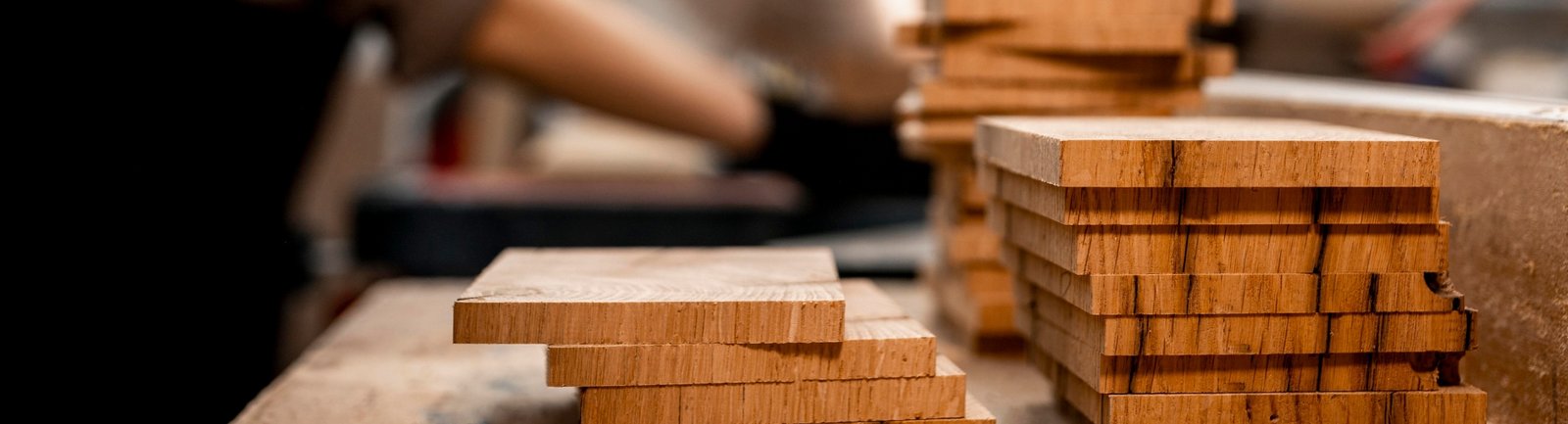
Rubberwood is pale, close-grained and remarkably uniform. That uniformity is why it takes stain and paint predictably across a large run — if your programme depends on five hundred pieces matching each other, this is the safer material.
Acacia does the opposite. It moves from honey through to deep chocolate within a single board, so every piece reads as individual. Buyers choose it when they want furniture that looks hand-made rather than manufactured, and they accept the variation as the point rather than a defect. Say so in your specification, because a QC team told to reject variation will reject half the order.
Hardness and where each one belongs
Acacia is harder and denser. For table tops, bench seats, bar surfaces and anything in a hotel or restaurant taking daily contact, that density earns its keep. Rubberwood is comfortably hard enough for cabinets, wardrobes, bed frames, shelving and domestic dining, which covers the majority of what we ship.
Neither is an outdoor timber. If a buyer asks us for exterior furniture in either species, we say no.
Both are plantation timbers
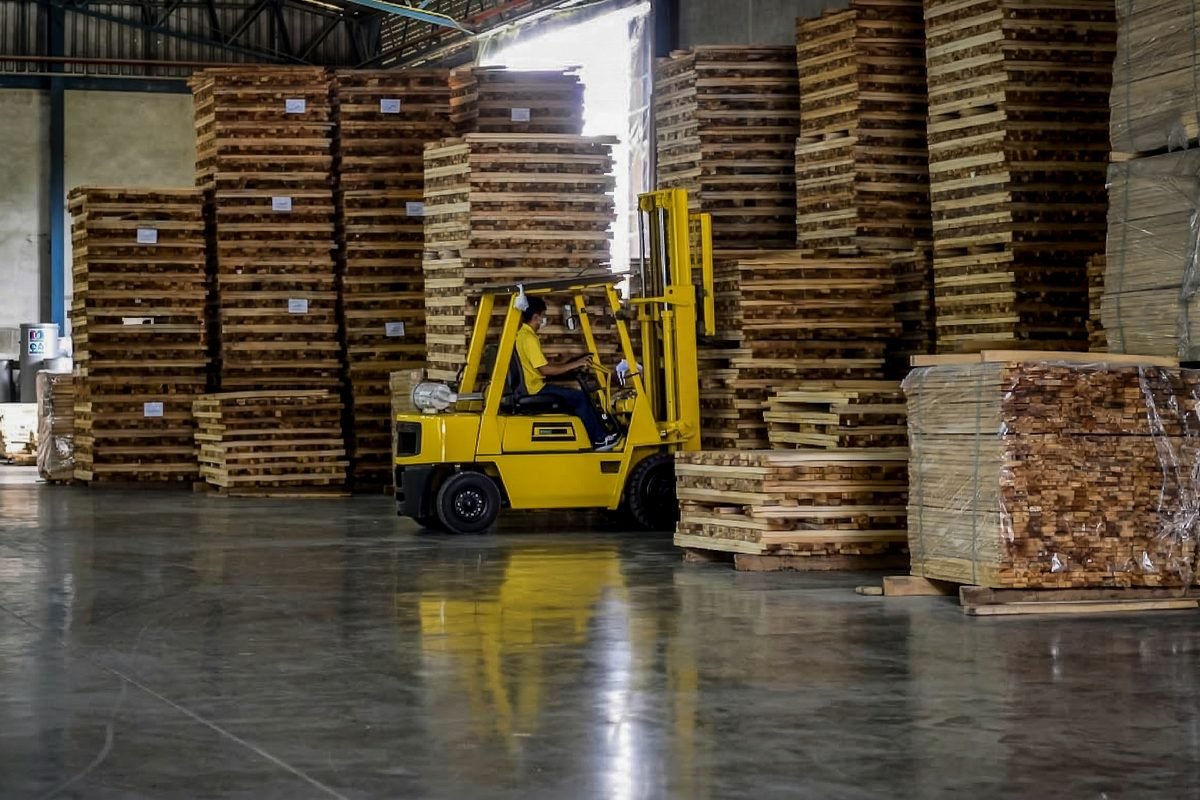
This matters for your compliance file more than for the furniture. Rubberwood comes from rubber plantations felled after around twenty-five years of latex tapping; acacia used in Thai furniture is likewise plantation-grown. Neither is cut from natural forest, so both trace back to defined plots — which is what makes an EUDR due-diligence statement practical rather than painful.
Cost, honestly
Acacia usually costs more per cubic metre, but the gap is narrower than buyers expect and it is often swamped by finish choice, hardware and packing method. The only reliable way to settle it is to quote the same drawing in both species and compare landed cost. We do that as a matter of course; most buyers would otherwise have to run the comparison across two suppliers and two lead times.
A short way to decide
- Need consistency across a large run, or a painted finish? Rubberwood.
- Want visible character and a hand-made look? Acacia.
- Heavy daily wear on a horizontal surface? Acacia.
- Cabinets, wardrobes, bedroom programmes at volume? Rubberwood.
- Still unsure? Ask for both quoted against the same drawing.
Planet Furniture works in both species at our factory in Chonburi, Thailand, and sources oak, ash, pine and mango on request. Send us a drawing and we will quote it both ways.