Blog
EUDR and Your Furniture Order: What EU Importers Need From a Thai Supplier

If you import wooden furniture into the European Union, the EU Deforestation Regulation is now part of your buying process rather than a compliance footnote. Furniture under HS heading 9403 is inside its scope, which means the paperwork behind your container matters as much as the finish on it.
Who actually has to file
The obligation sits with the operator placing the goods on the EU market — in practice, you or your importer of record, not the factory in Thailand. What the factory owes you is the evidence that makes your filing possible. A supplier who shrugs at that distinction is a supplier who will leave you exposed at the border.
What the file has to contain
A due-diligence statement rests on three things: information, risk assessment, and risk mitigation. The information layer is the part your supplier controls, and it includes the species, the country of harvest, the quantity, and geolocation data for the plots where the timber was grown.
That last requirement is where many tropical hardwood supply chains struggle. If timber has passed through several traders and been consolidated from mixed forest sources, reconstructing plot-level geolocation after the fact ranges from difficult to impossible.
Why plantation rubberwood makes this easier
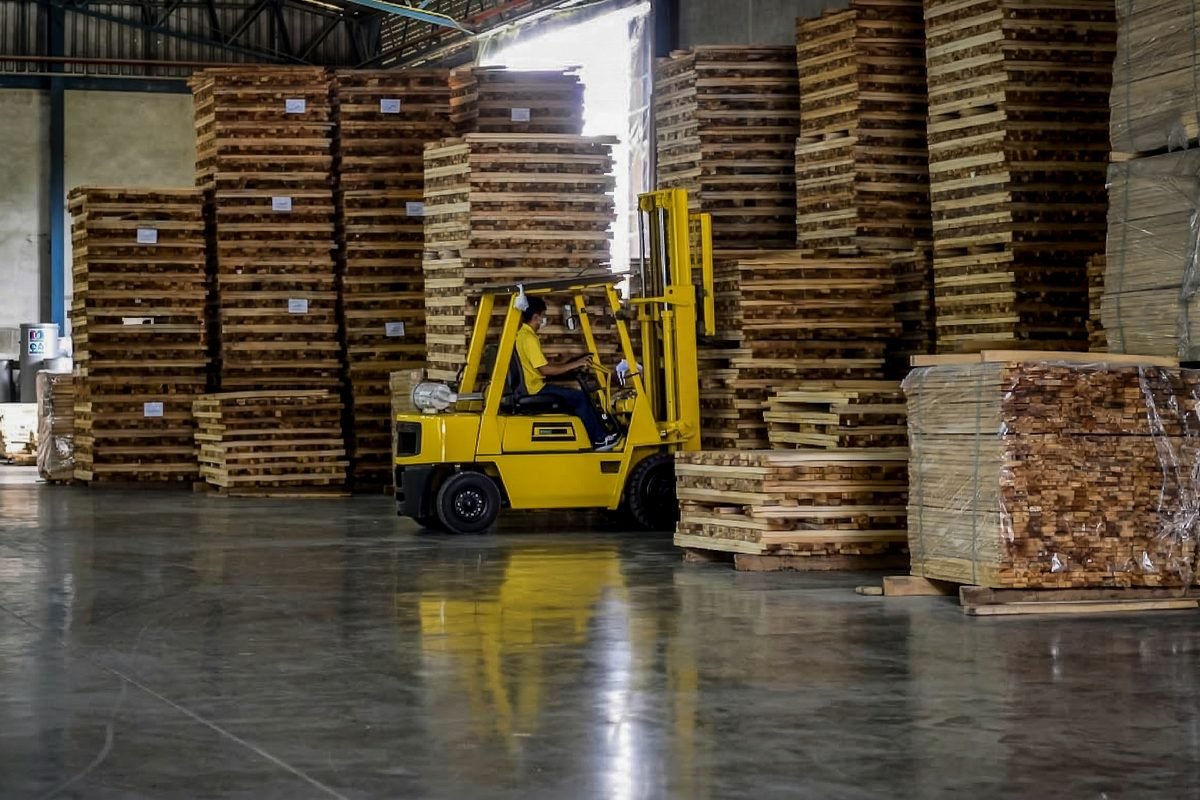
Rubberwood comes off rubber plantations that were established, mapped and tapped for latex for roughly twenty-five years before the tree was ever felled for timber. The plot is a known, bounded, registered piece of agricultural land, not an area of natural forest. Acacia used in Thai furniture is likewise plantation-grown.
This does not make the filing automatic, and no honest supplier should tell you it does. It does mean the underlying facts exist and can be documented, which is the difference between a due-diligence file that takes a week and one that never closes.
The document set to ask for
- Commercial invoice and packing list with species stated per line
- Certificate of origin
- Timber source documentation from the mill, with plot references
- Species declaration — the botanical name, not just the trade name
- Any FSC or chain-of-custody certificates held upstream, with the honest limits of their scope
A word on certification claims
Our own timber comes from FSC-certified suppliers. We phrase it that way deliberately: the certificate is held by the sawmills we buy from, not by our factory, so we do not describe the finished furniture as FSC-certified. If a supplier is loose about that distinction on their website, assume they will be loose about it in your audit too.
Raise it before you order, not after
Tell your supplier which member state you are clearing into and confirm the exact document set at quotation stage. Retrofitting compliance evidence onto a container that has already sailed is the most expensive way to discover a gap.
Planet Furniture manufactures solid rubberwood and acacia furniture in Chonburi, Thailand and exports through Laem Chabang to buyers across Europe. Ask our export team what we can document for your market.
This article is general information for buyers, not legal advice. Confirm your obligations with your own customs broker or counsel.