

Blog
Importing Timber Furniture from Thailand to Australia: The Rules to Check Before You Order


Most of what decides whether a container of Thai furniture clears the Australian border without delay is settled before production starts: how the timber and its packaging are treated, where the timber was harvested, which documents travel with the goods and which warnings go on each piece. Four sets of rules cover most wooden furniture imports: biosecurity, illegal logging, duty and GST, and product safety. This is general information, not legal advice. The agencies listed at the end publish the full requirements, and your customs broker should confirm how each rule applies to your products.
Biosecurity: the timber and its packaging
All imported timber and wooden articles, furniture included, must meet the import conditions in BICON, the Biosecurity Import Conditions system run by the Department of Agriculture, Fisheries and Forestry (DAFF). Those conditions require you to show that pest risks have been dealt with, either through the manufacturing process or by an approved treatment. DAFF checks this against your documents, by inspecting the goods when they arrive, or both, and it warns that wood-boring insects arriving as eggs or larvae can go unnoticed for years. Find the BICON case that matches your products before you confirm the order, so that any treatment is done and documented before the container leaves Thailand.
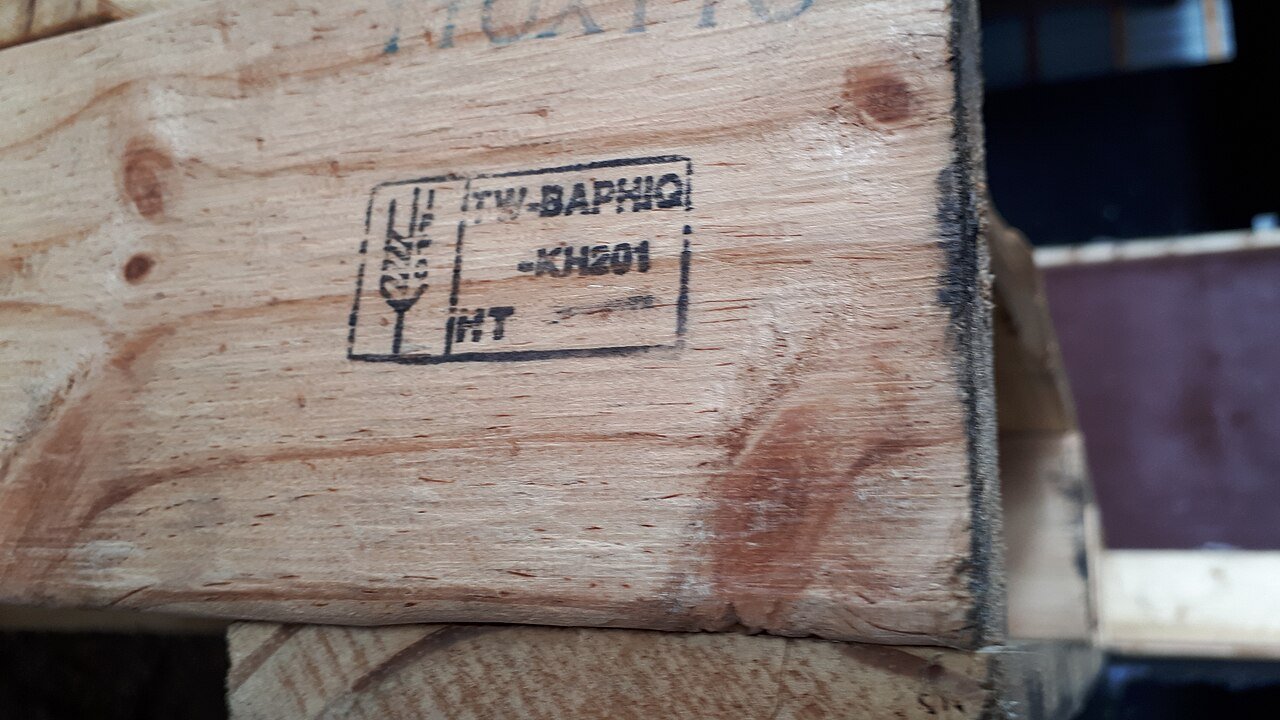
An ISPM 15 mark on a timber pallet. Photo: Oaktree b, CC BY-SA 4.0, via Wikimedia Commons.

The pallets, crates and bearers that carry the furniture have their own BICON conditions. Australia accepts solid timber packaging that complies with ISPM 15, the international standard for wood packaging, and also accepts the alternative treatments set out in BICON. Each sea container also needs a packing declaration covering the packaging materials and the cleanliness of the container. Under DAFF’s documentary policy it must be issued by the exporter, supplier or packer who packed the goods into the container, so when the factory loads the container, the declaration should come from the factory with the other shipping documents.
Illegal logging laws: due diligence on the timber
Australia’s illegal logging laws list furniture, under Chapter 94 of the tariff, among regulated timber products. Unless a consignment is exempt, for example because its regulated timber products are worth AUD 1,000 or less in customs value, anyone who imports regulated timber products must have a due diligence system: obtain information about the product and its timber, identify and assess the risk that the timber was illegally harvested, and reduce that risk where needed. Failing to meet the due diligence requirements is an offence that can attract a civil penalty. The rules changed on 3 March 2025, when the Illegal Logging Prohibition Rules 2024 replaced the Illegal Logging Prohibition Regulation 2012. DAFF’s Due Diligence Toolkit for Importers walks through each step, and its illegal logging page describes further measures, such as timber testing to verify species and origin claims, so check it for what applies when you import.
Rubberwood (Hevea brasiliensis) and acacia, our two main timbers, are both plantation-grown, and our comparison of rubberwood and acacia explains how they differ in use. Whatever the species, your records should start with the scientific name and country of harvest of every timber in the piece. Planet Furniture buys its rubberwood from FSC-certified suppliers. The certificate is held by those sawmills, not by our factory, so ask for the supplier’s certificate details for your due diligence records rather than expecting an FSC claim on the finished furniture.
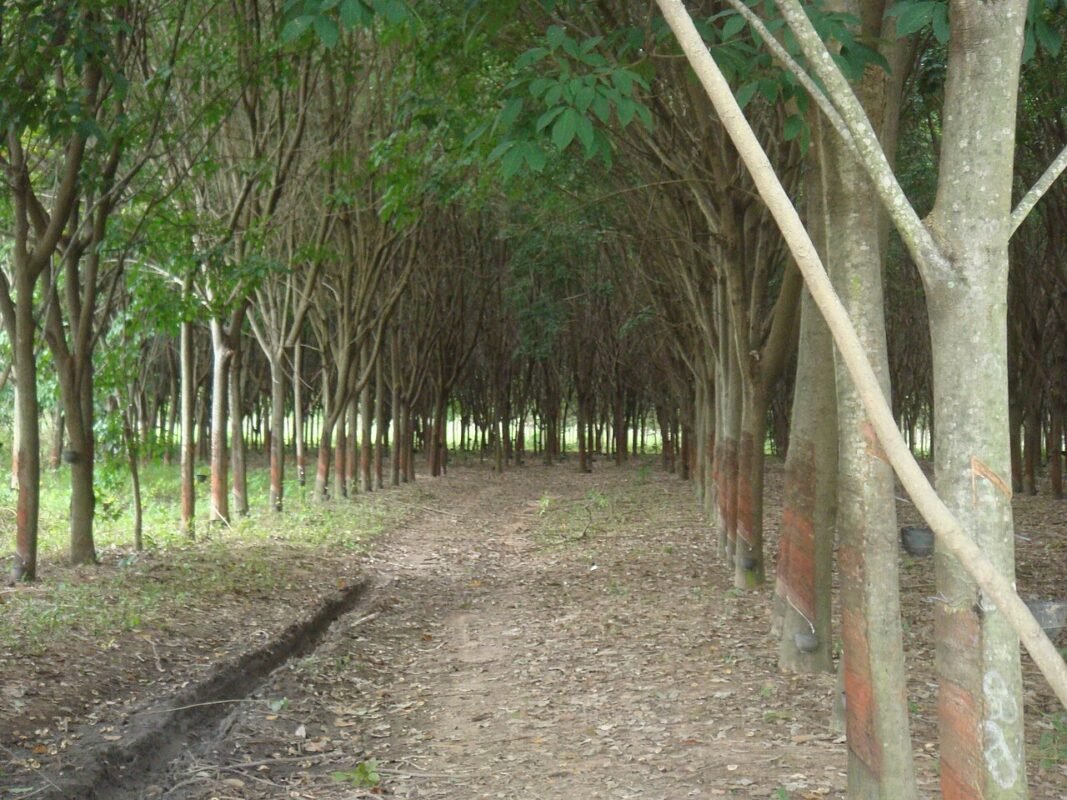
Rubber trees on a plantation in Thailand. Photo: 松岡明芳, CC BY-SA 3.0, via Wikimedia Commons.

Duty and GST: claiming the TAFTA rate
The Thailand-Australia Free Trade Agreement (TAFTA) entered into force on 1 January 2005, and the Department of Foreign Affairs and Trade reports that by 2025 all tariffs and tariff-rate quotas under the agreement had been eliminated. The Australian Border Force treats a TAFTA certificate of origin as the basis for claiming the preferential rate, and the certificate must be issued by an authorised Thai body to a registered exporter. Goods made partly from non-originating materials, such as imported glass, metal fittings or fabric, are assessed against the product-specific rules of origin in Annex 4.1 of the agreement, so check the rule for your tariff classification before production. GST is payable on imported goods unless an exemption applies.
Product safety: toppling furniture and bunk beds
The Consumer Goods (Toppling Furniture) Information Standard 2024 has applied since 4 May 2025. It covers clothing storage units (chests of drawers and wardrobes, for example) and bookcases that are 686 mm or taller; entertainment units of any height; and hall tables, display cabinets, buffets and sideboards that are 686 mm or taller. Suppliers must make sure a warning label is fixed to the furniture, give warnings in store on or near the product and in online listings, and include safety information in the instructions. Because the label goes on the piece itself, agree the artwork and its position with the factory before production so it can be applied at packing. Bunk beds fall under a separate mandatory standard with construction, design, testing and labelling requirements.
Shipping from Laem Chabang
Our factory and Laem Chabang, Thailand’s main container port, are both in Chonburi province, and our export containers ship through Laem Chabang. Australia is one of the markets our containers already go to, alongside Europe, the United States and South Africa. Services run from there to Australia’s main container ports, including Sydney (Port Botany), Melbourne, Brisbane, Fremantle and Adelaide. Transit times depend on the carrier and on whether the vessel calls direct or transships on the way, so ask your freight forwarder for current schedules. Agree the Incoterm before you order as well: on FOB Laem Chabang, for example, the ocean freight and the insurance are yours to arrange.

Container cranes at Fremantle, the port for Perth. Photo: JarrahTree, CC BY 2.5 au, via Wikimedia Commons.

Working across time zones
Thailand is on UTC+7 all year and does not use daylight saving. Brisbane is three hours ahead of Thailand; Sydney and Melbourne are three hours ahead from April to October and four during daylight saving, from October to April; Perth is one hour ahead. Our office is open Monday to Friday, 08:00 to 17:00 Thai time. For buyers on the east coast that gives a shared window from late morning (midday in Sydney and Melbourne during daylight saving) to the end of their working day, and for buyers in Perth it covers a standard 09:00 to 17:00 working day.
What to ask a Thai factory for
- The scientific name and country of harvest of every timber, with the supplier documents you need for your due diligence records.
- How pest risk is managed in production, and which treatment certificates will travel with the goods to meet your BICON case.
- ISPM 15 marks on every solid timber pallet and crate, and a packing declaration from whoever packs the container.
- A TAFTA certificate of origin, and confirmation that each design meets its product-specific rule of origin.
- For furniture covered by the toppling standard (entertainment units of any height; clothing storage units such as chests of drawers, tallboys and wardrobes, and bookcases, buffets, sideboards, hall tables and display cabinets 686 mm or taller): toppling warning labels printed to your artwork and applied at the factory, and the safety text for the instructions.
Planet Furniture makes solid rubberwood and acacia furniture at our factory in Chonburi, Thailand, and exports more than 15 containers a month. The range includes entertainment units, buffets and sideboards and chests of drawers and tallboys. For other markets, see our guides for the United States and the European Union. Send us your specification and tell us it is for Australia, so these questions are answered before the first sample.
Sources
- DAFF: Importing timber, wooden articles, bamboo and related products
- DAFF: Timber and bamboo packaging
- DAFF: ISPM 15 for solid wood packaging
- DAFF: Minimum documentary and import declaration requirements policy
- DAFF: Australia’s illegal logging laws
- DAFF: Due diligence for importers
- DFAT: Thailand-Australia Free Trade Agreement
- Australian Border Force: Thailand-Australia Free Trade Agreement
- Australian Border Force: Cost of importing goods
- ACCC Product Safety: Toppling furniture mandatory information standard, supplier guide
- ACCC Product Safety: Bunk beds mandatory standard
Top image: Port Botany, Sydney. Photo: J Bar, CC BY 2.5, via Wikimedia Commons.
